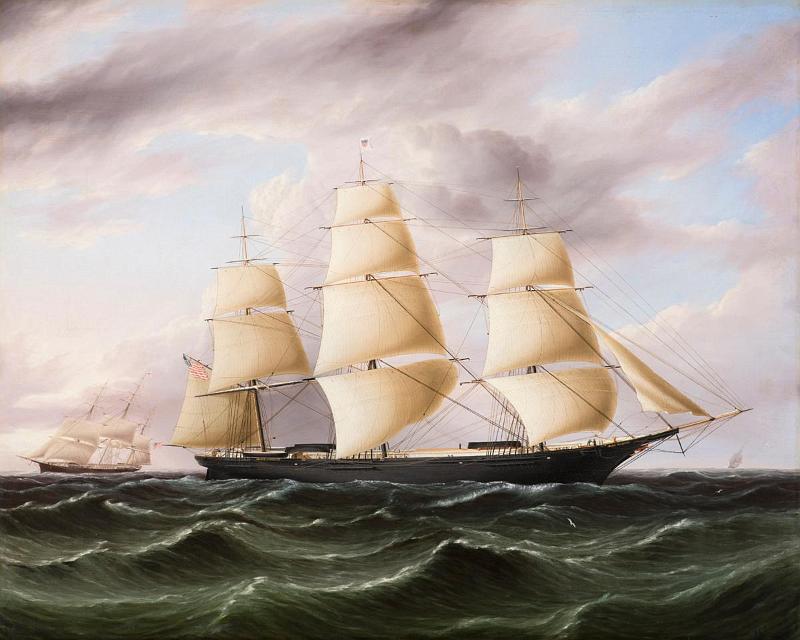
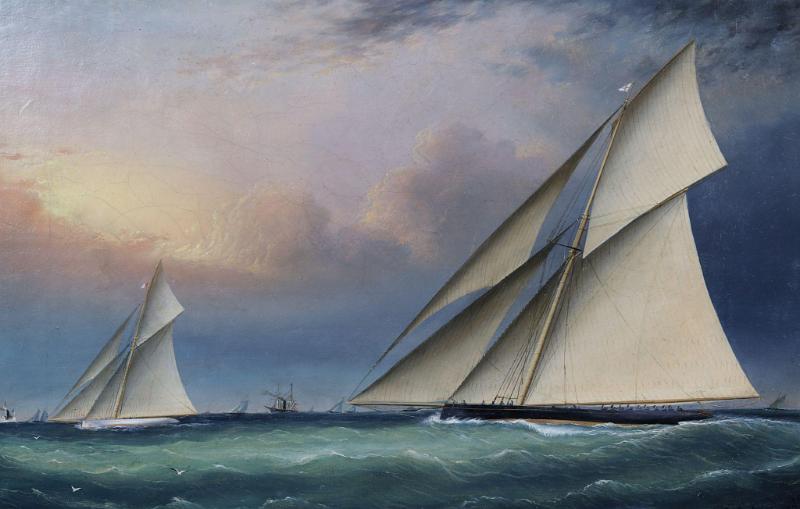
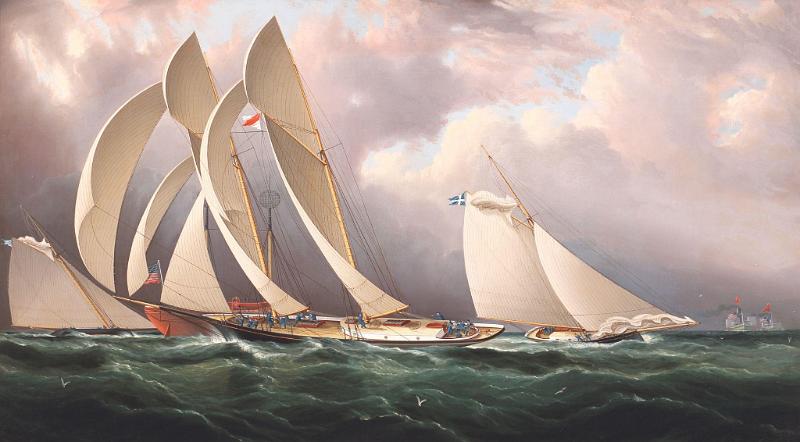
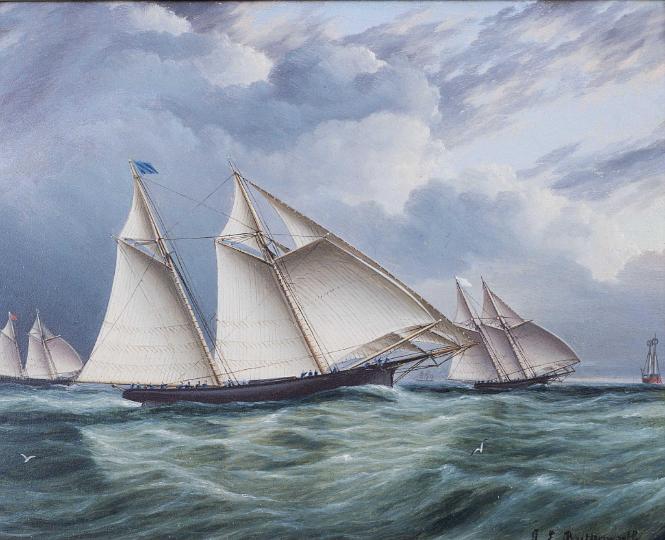
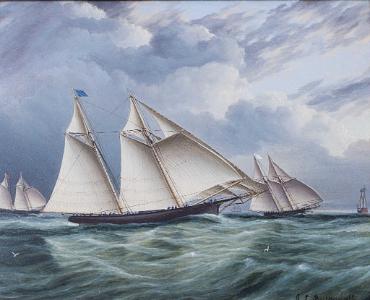
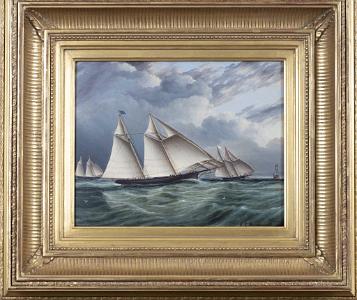
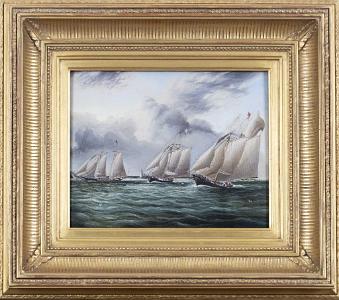
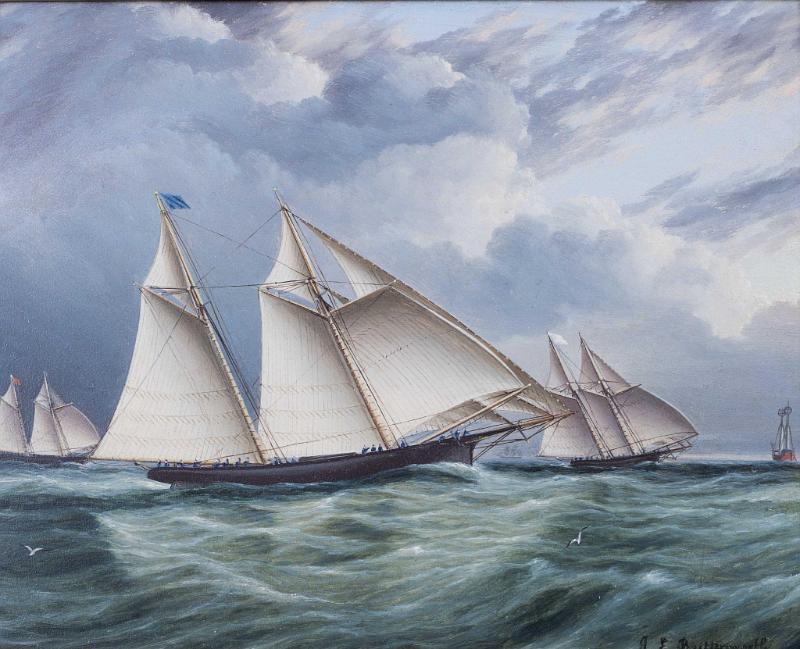
Pair of Paintings by James E. Buttersworth Depicting the Start of the Great Ocean Race of 1866.

Information James E. Buttersworth 1815-1894
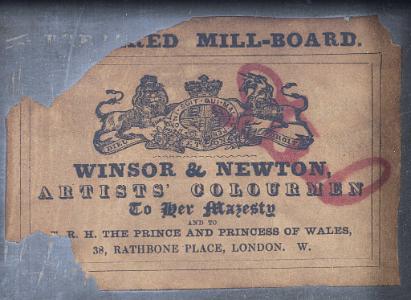
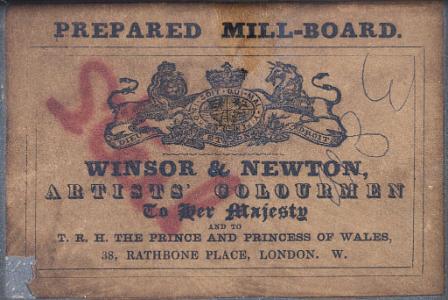
One signed lower right "J.E. Buttersworth" and inscribed in pencil verso "Henrietta passing the lightship in the Ocean Match with the Fleetwing and Vesta in view". Other has a signature that is partially lost in the lower right corner, and is inscribed in pencil verso "The start passing Sandy Hook Lightship" the other shows the yachts passing the Sandy Hook light House located on the shore. Both paintings have the original paper labels mounted to the reverse for artist supplier Winsor & Newton, London. Most J.E. Buttersworth paintings on board have labels by this supplier.
Dimensions for each painting Height 8, Width 10, Inches (PA1099)
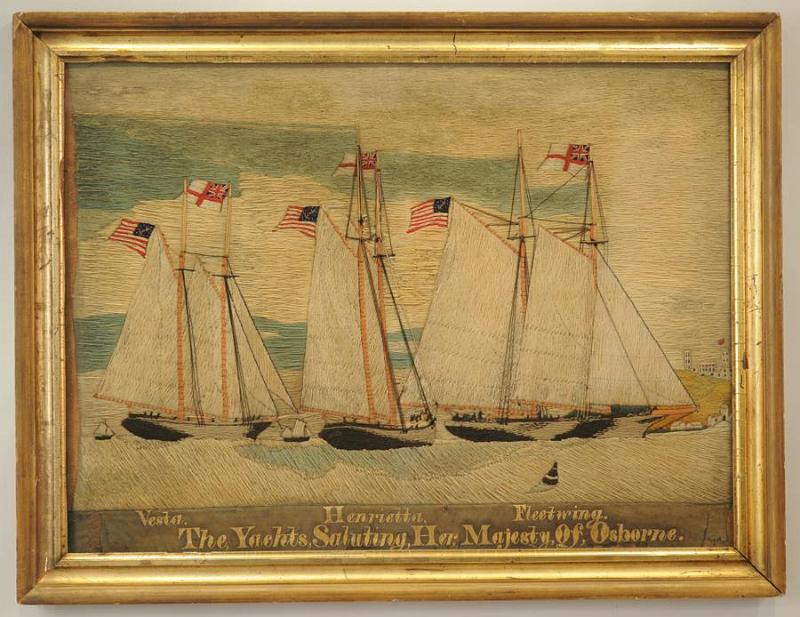
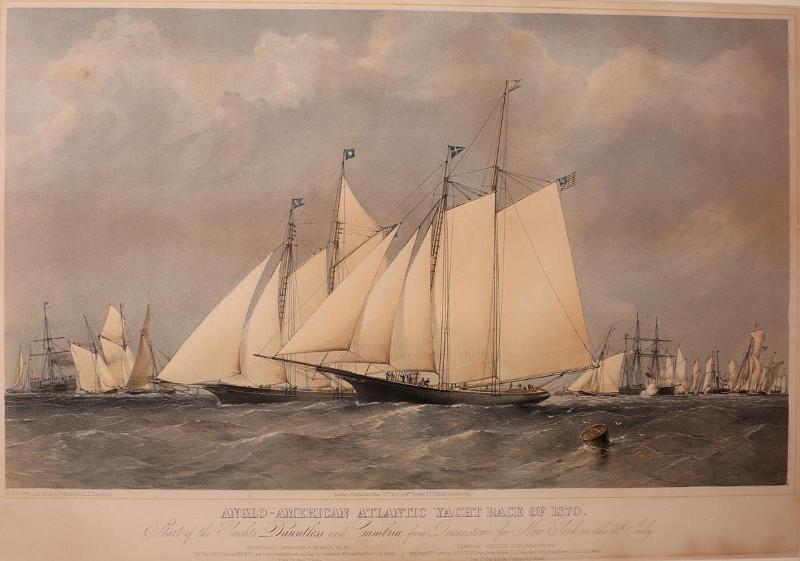
Note 1 : The Great Ocean Race, according to legend, began as a drunken wager at the Union Club in New York, when Pierre Lorillard, who owned Vesta, boasted his yacht was the fastest. The transatlantic race between Vesta, George and Franklin Osgood's Fleetwing, and James Gordon Bennett, Jr.'s Henrietta began December 11, 1866 off Sandy Hook, New Jersey. For nearly two weeks the yachts raced in treacherous waves and freezing conditions across the North Atlantic to The Needles, Isle of Wight. Henrietta made it to the finish line first, completing the journey in 13 days, 22 hours and capturing the $90,000 prize. Fleetwing, which tragically lost several crew members when water swept over the deck, arrived about eight hours later, followed shortly by Vesta. They yacht owners were granted an audience with Queen Victoria.
Note 2: The Great Ocean Race was a popular subject of Buttersworth and given it was the first Trans Atlantic race the press made the event famous and caused allot of excitement both here and in England.
1866
Classification(s)