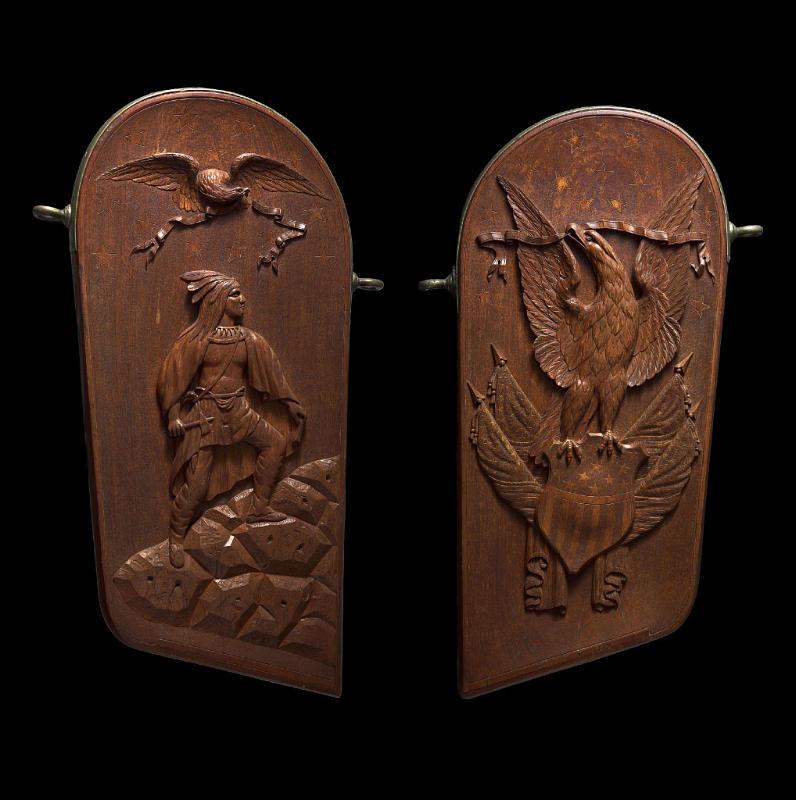
Rare Carved Gangway Board with a Carved Falcon and Falconer from an American Yacht circa 1880.
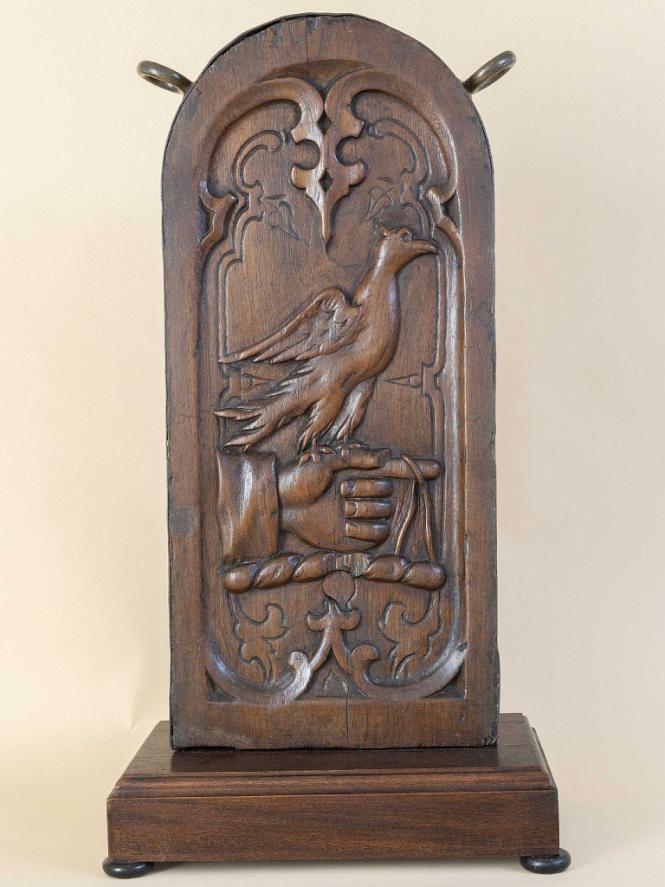
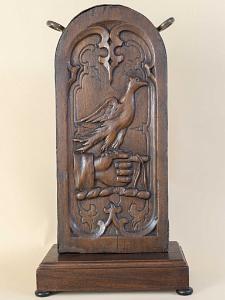
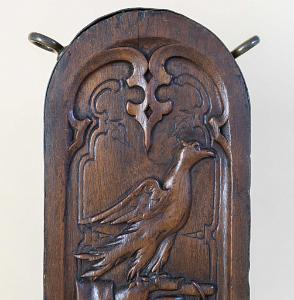
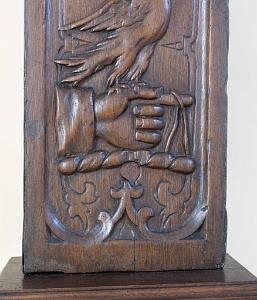
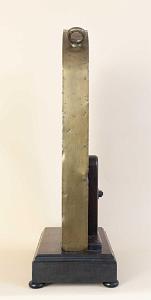
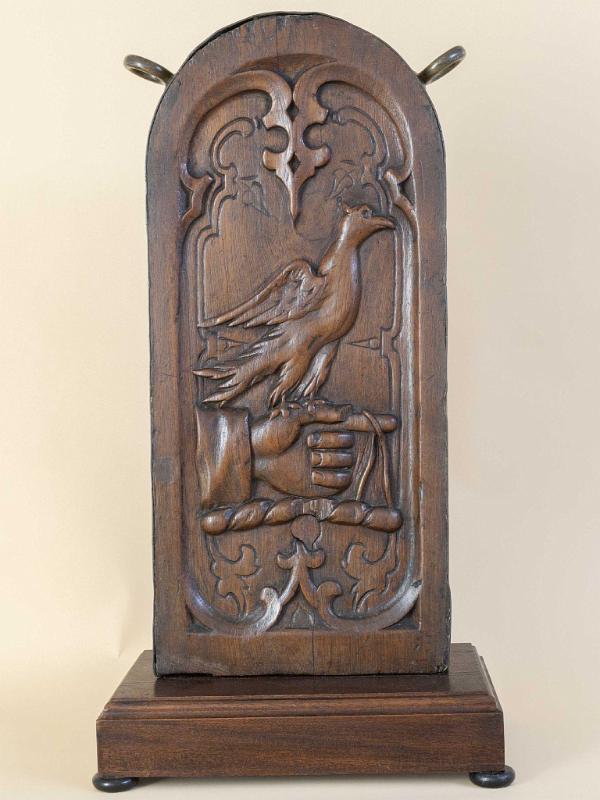
InformationCarved small mahogany gangway board from an American yacht circa 1880. The gangway board has a typical vertical rectangular shape with a domed top. The is a border around the carving which recesses into the surface. Inside the border is a carved design with a well carved hand closed with the pointer finger extended out. A carved falcon’s talons are clung to the hand and wrapped around the fingers are the cords for the falcon’s mask. The quality of the carving is excellent and the subject matter very rare and interesting. The sides of the carving are wrapped in brass with a pair of brass rings mounted to each corner near the top. The gangway board if mounted on a attractive wood base that holds it securely in a vertical position.
Dimensions of gangway board: Height 25 1/4Inches, Width 11 ½ Inches, Thickness 3 Inches
Dimensions with base: Height 28 ¼ Inches, Width 14 7/8 Inches, Depth 9 ½ Inches
Reference: “The American Yacht List for the Year 1887” page50. Listed on this page is the Yacht Falcon a screw steamer built by Harlin and Hollingsworth Co. in 1880 was owned by Joseph Stickney and belonged to the port of New York. The vessel measured 106 feet in length, 16 feet in breath and drew9 feet. Pair of gangway boards were typically found on naval ships and were occasionally placed on large yachts. It is very possible that this “Yacht Falcon” was the vessel the gangway board featuring the falcon was built for. (FA1220)
Carved Falconry is the traditional art and practice of training and flying falcons (and sometimes eagles, hawks, buzzards and other birds of prey). It has been practised for over 4000 years. The practice of falconry in early and medieval periods of history is documented in many parts of the world. Originally a means of obtaining food, falconry has acquired other values over time and has been integrated into communities as a social and recreational practice and as a way of connecting with nature. Today, falconry is practised by people of all ages in many countries. As an important cultural symbol in many of those countries, it is transmitted from generation to generation through a variety of means, including through mentoring, within families or in training clubs. The modern practice of falconry focuses on safeguarding falcons, quarry and habitats, as well as the practice itself. And while falconers come from different backgrounds, they share universal values, traditions and practices, including the methods of breeding, training and caring for birds, the equipment used and the bonds between the falconer and the bird. The falconry community includes supporting entities such as falcon hospitals, breeding centres, conservation agencies and traditional equipment makers.
The purpose of a hood is to calm the bird. These birds are so visually oriented that they are not fearful of what they cannot see. If they cannot see it, then it must not be there. A freshly trapped bird with a hood on will eat on the fist within minutes or hours of trapping, even if it is standing on the fist of a person. Simply because she cannot see anything alarming, there is nothing to be alarmed about. Hoods protect the bird and allow ease of control of situations that otherwise could be startling to the bird.
Falcon Hood: The purpose of a hood is to calm the bird. These birds are so visually oriented that they are not fearful of what they cannot see. If they cannot see it, then it must not be there. A freshly trapped bird with a hood on will eat on the fist within minutes or hours of trapping, even if it is standing on the fist of a person. Simply because she cannot see anything alarming, there is nothing to be alarmed about. Hoods protect the bird and allow ease of control of situations that otherwise could be startling to the bird.
Circa 1880
Classification(s)