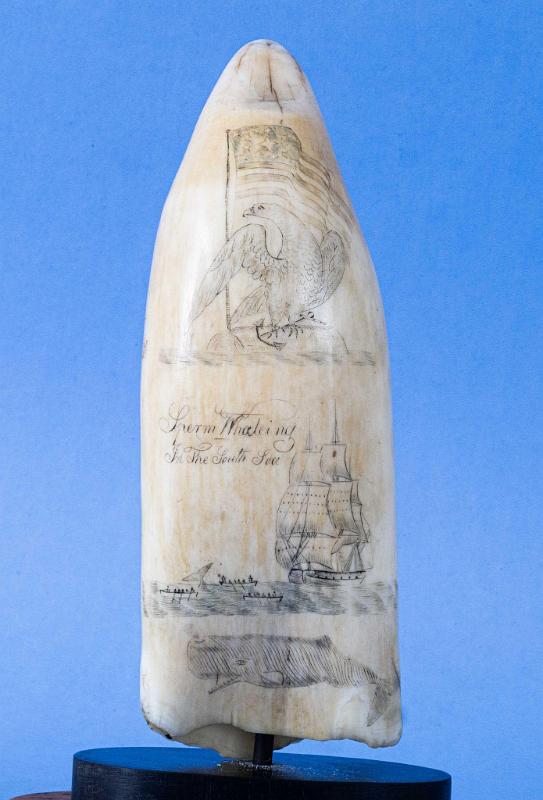
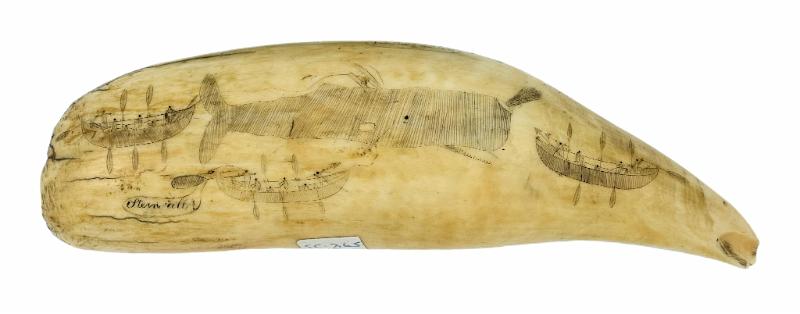
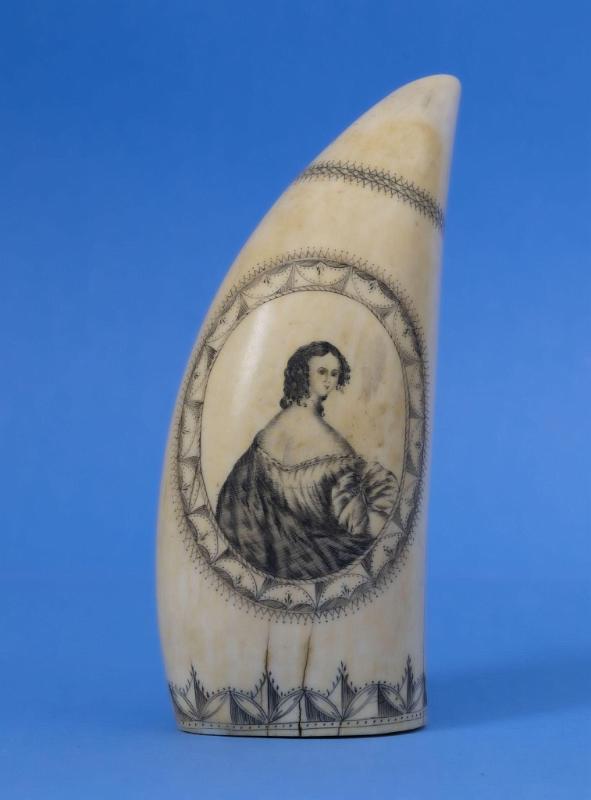
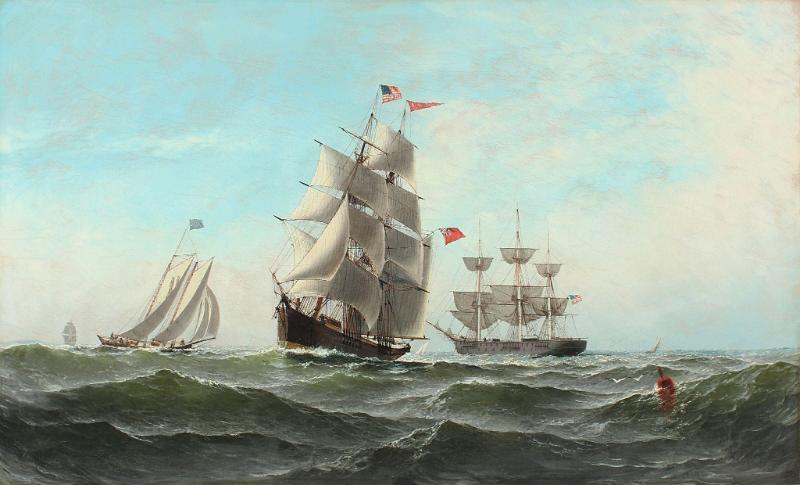
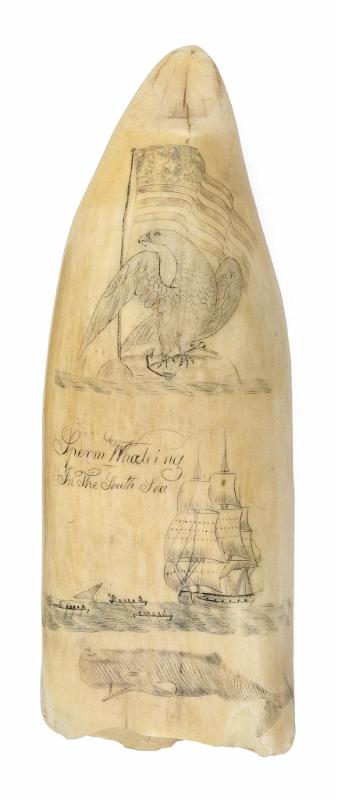
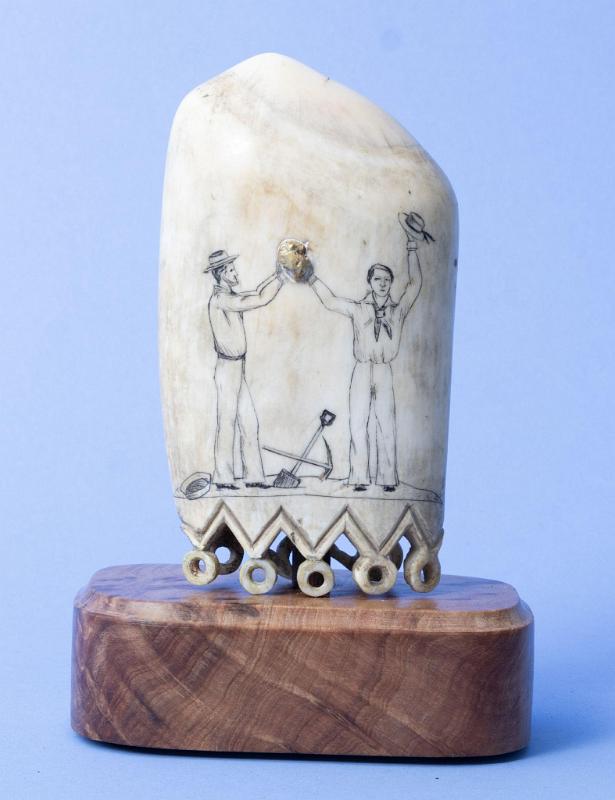
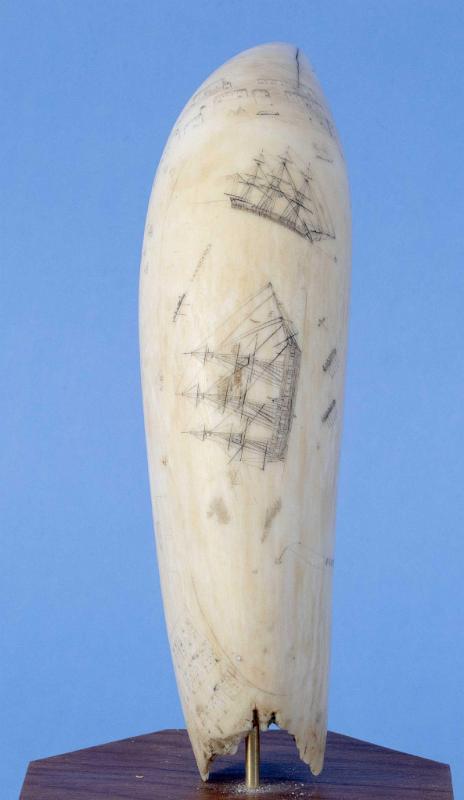
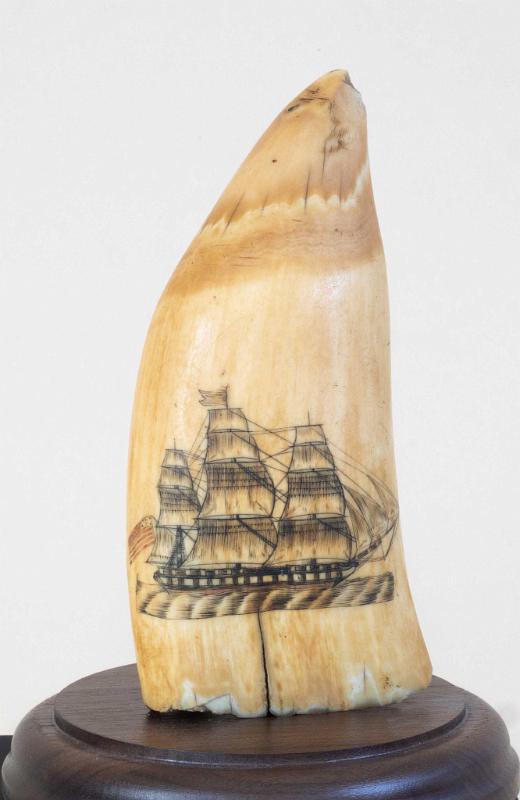
SCRIMSHAW WHALE'S TOOTH WITH WHALING SCENE AND U.S. NAVAL VESSELS, American circa 1840
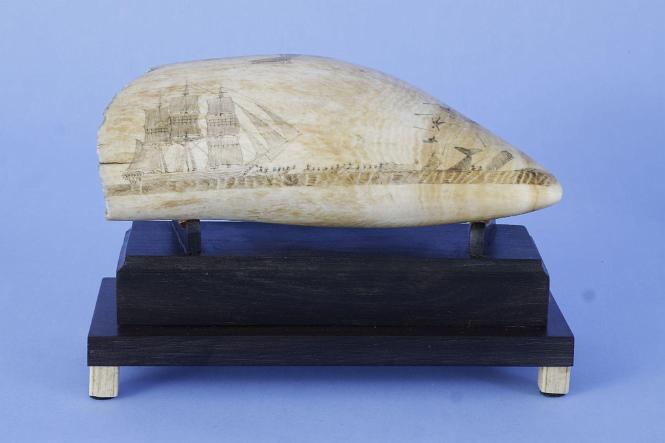
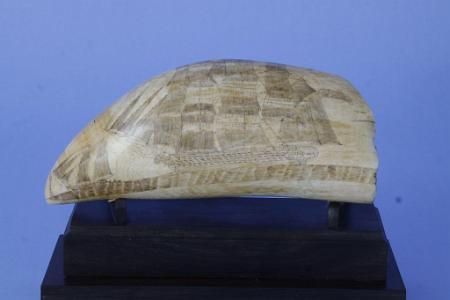
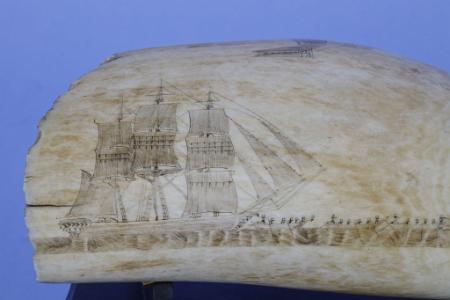
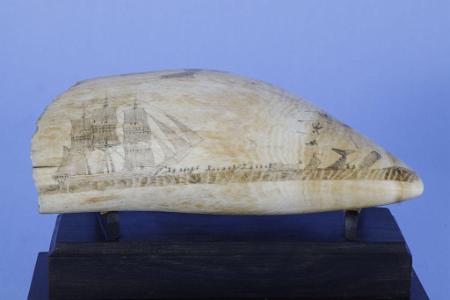
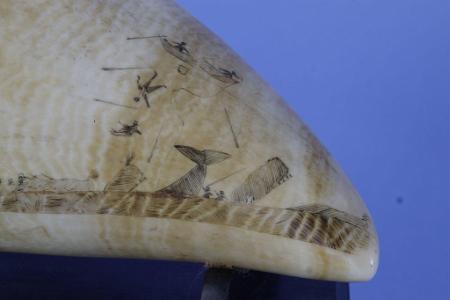
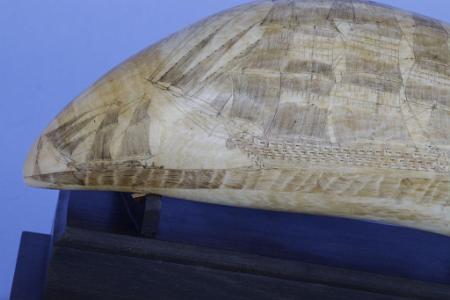
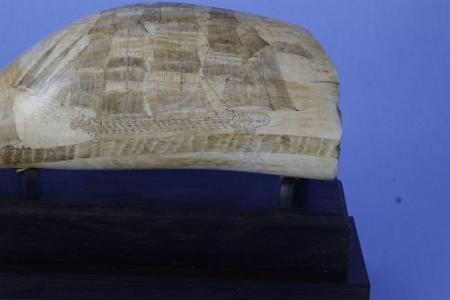
InformationSCRIMSHAW WHALE'S TOOTH WITH WHALING SCENE AND Portrait of the USN Ship PENNSYLVANIA.
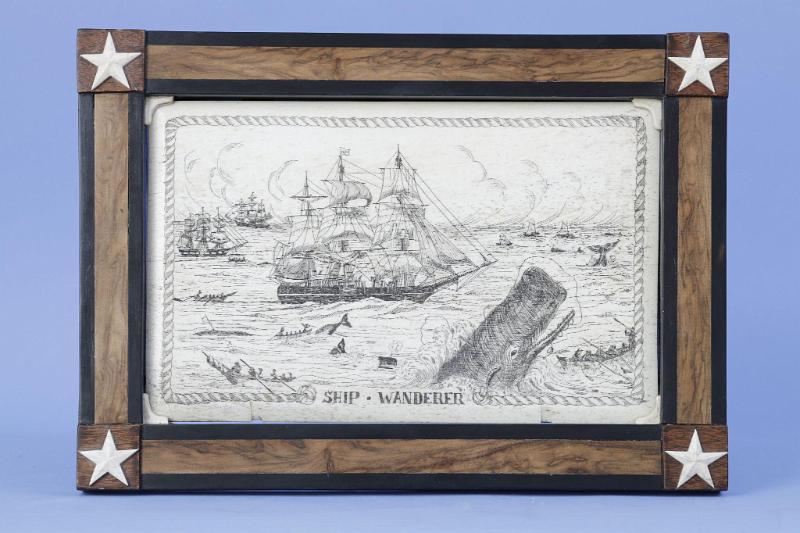
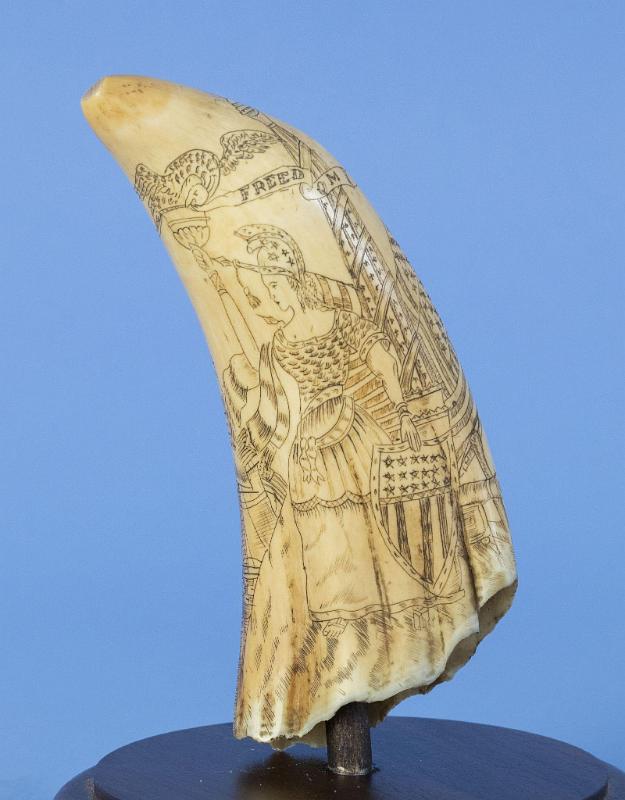
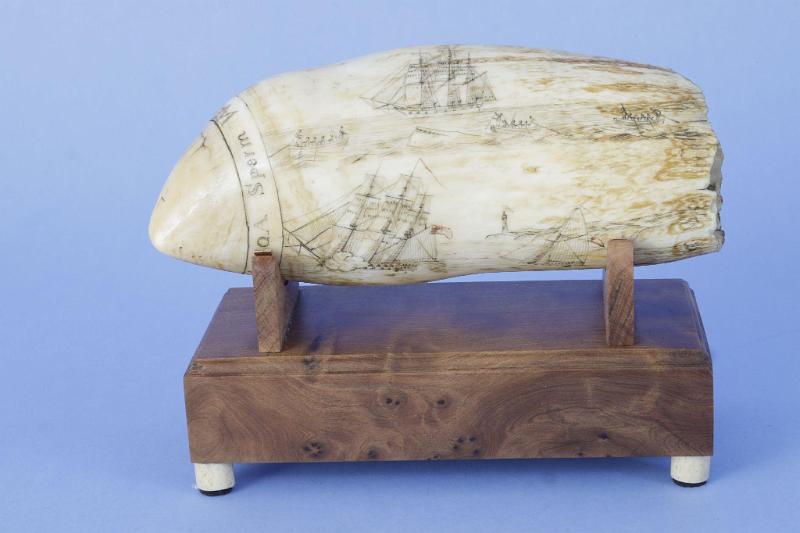
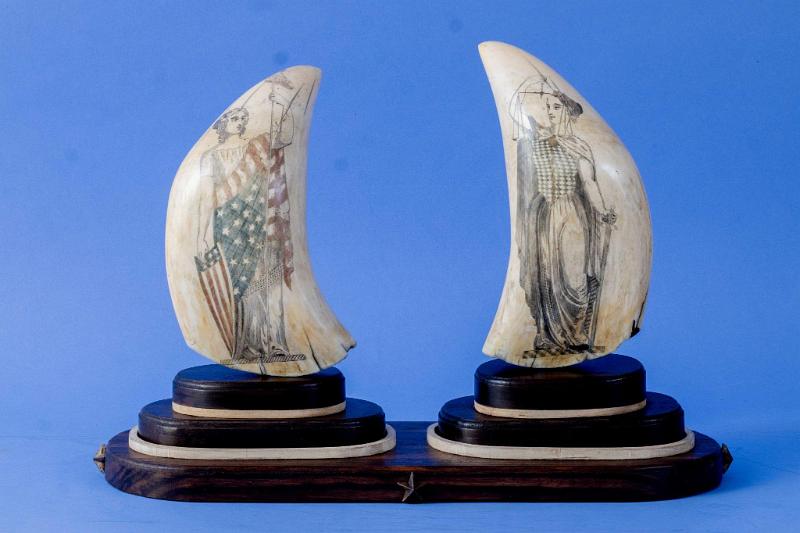
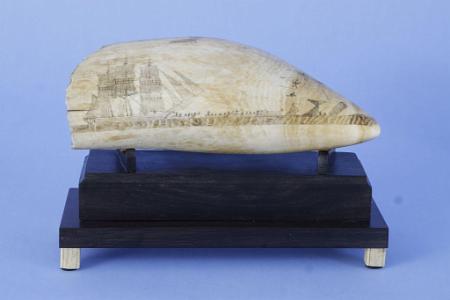
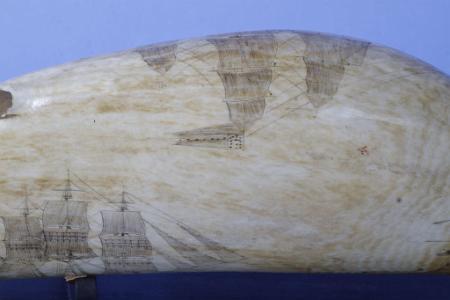
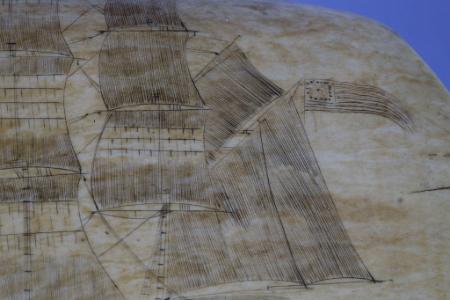
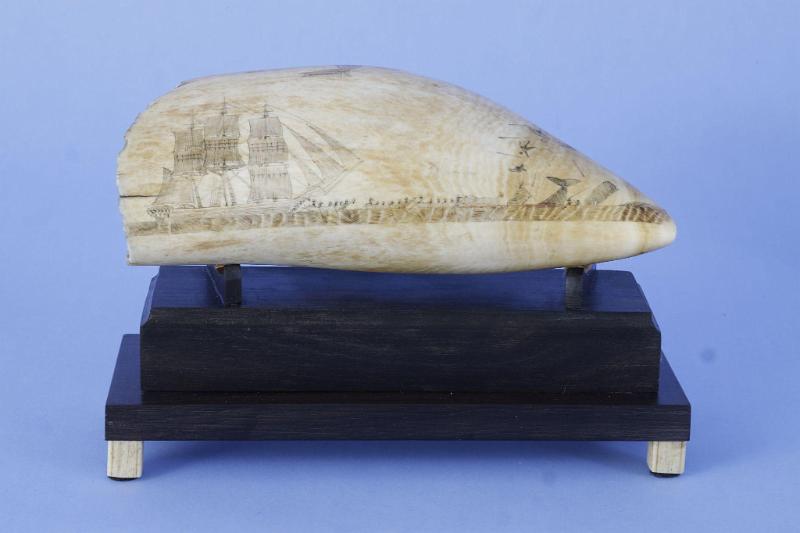
Obverse depicts a panoramic view of a whale ship, three whaleboats in pursuit of a pod of whales, and one stoved boat, with the whale men, their irons and barrels of line, and the split hull of their whaleboat tossed akimbo. Reverse depicts a triplledecker, subtly marked "UNS" within a foliate design on the stern board and "PA" for "Pennsylvania" at the bow. The "Pennsylvania" was the largest sailing ship built for the Navy and the only tripledecker. A smaller vessel with a dory is visible off the bow, and a lighthouse is in the far distance.
Dimension: Length 6.75".
Condition: The tooth has a deep mellow patina and is in fine condition. The tooth has a custom two-tier ebony base.
Provenance:
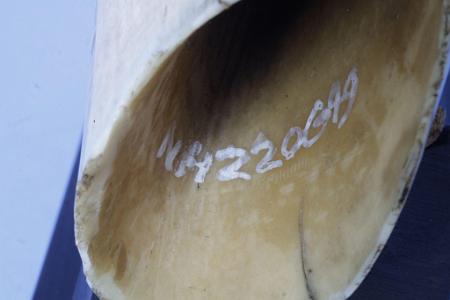
The collection of Meylert Armstrong - Meylet Armstrong was probably the largest collector of fine scrimshaw during the 1940s and 50's. He sold most of his collection to Norman Flayderman who illustrated this tooth in his book. The inside of the tooth has Armstrong inventory code in white ink "HH220649"
Collection of E. Norman Flayderman.
Collection of Mr. and Mrs. John Miklos.
Illustrated: Scrimshaw and Scrimshanders, Whales and Whalemen by E. Norman Flayderman, (New Milford, Ct.: N. Flayderman & Co., Inc., 1972), p. 71.
Note: Ship-of-the-line Pennsylvania was one of "nine ships to rate not less than 74 guns each" authorized by Congress 29 April 1816. She was designed and built by Samuel Humphreys in the Philadelphia Navy Yard. Her keel was laid in September 1821, but tight budgets slowed her construction, preventing her being launched until 18 July 1837. The largest sailing warship ever built for the U.S. Navy, she had four complete gun decks and was on par with the large ships-of-the-line built in Europe. Pennsylvania shifted from her launching site to off Chester, Pa., 29 November 1837 and was partially manned there the following day. Only 34 of her guns were noted as having been mounted 3 December 1837. She stood downriver for Newcastle, Del., 9 December, to receive gun carriages and other equippage before proceeding to the Norfolk Navy Yard for coppering her hull. She departed Newcastle 20 December 1837 and discharged the Delaware pilot on the 25th. That afternoon she sailed for the Virginia Capes. She came off the Norfolk dry dock 2 January 1838. That day her crew transferred to Columbia. Pennsylvania remained in ordinary until 1842 when she became a receiving ship for the Norfolk Navy Yard. A Bureau of Ordnance Gun Register for 1846 records her armament as follows: Spar deck: two nine-pounder cannons and one small brass swivel. Main deck: four 8-inch chambered cannons received from Norfolk in 1842, and thirty-two 32-pounder cannons. Middle deck: four 8-inch chambered cannons received from Norfolk in 1842, and thirty 32-pounder cannons. Lower deck: four 8-inch chambered cannons and twenty-eight 32-pounder cannons.
She remained in the Yard until 20 April 1861 when she was burned to the waterline to prevent her falling into Confederate hands.
Circa 1840