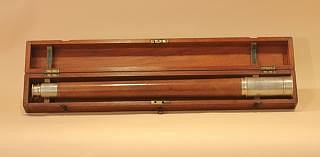
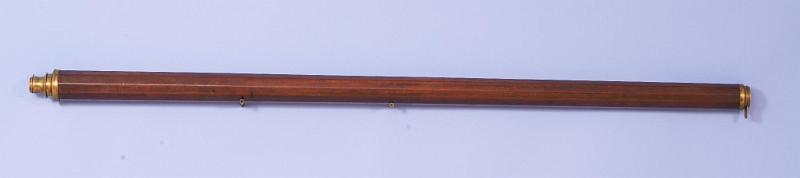
Rare 10 Sided Mahogany Telescope signed "Nairne London" circa 1790
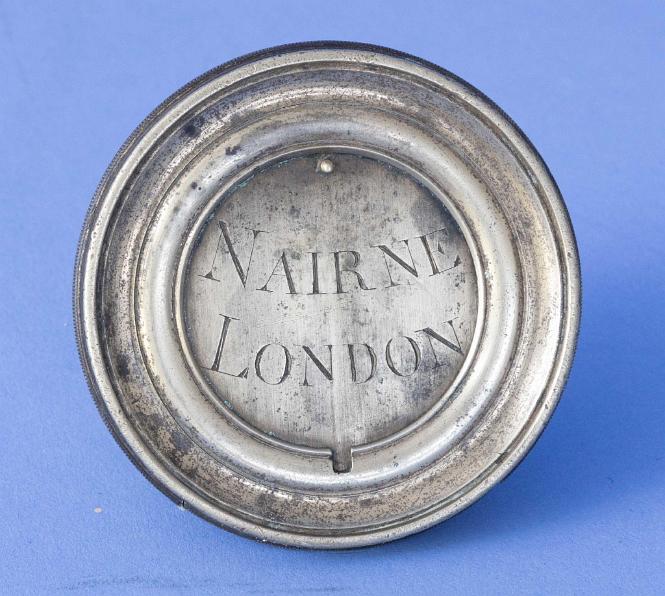
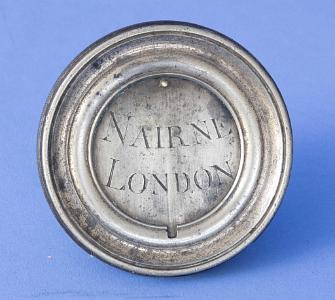

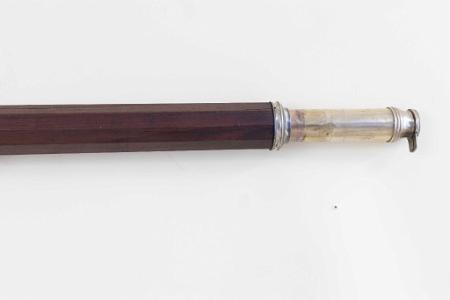
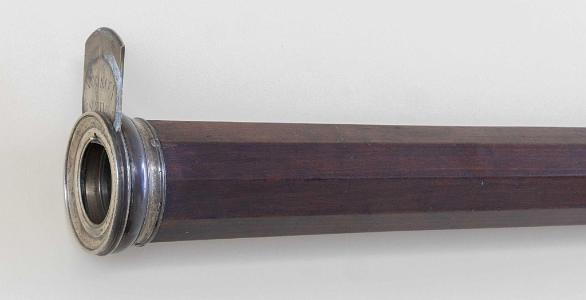
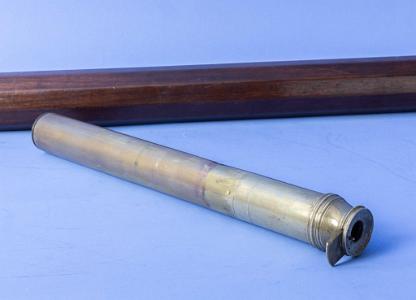
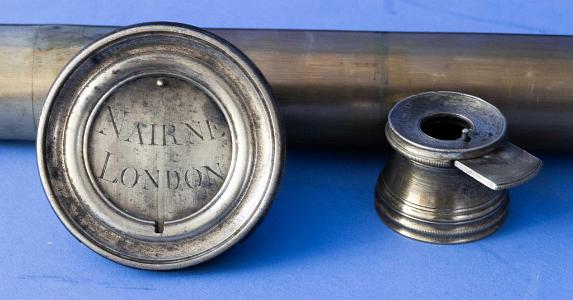
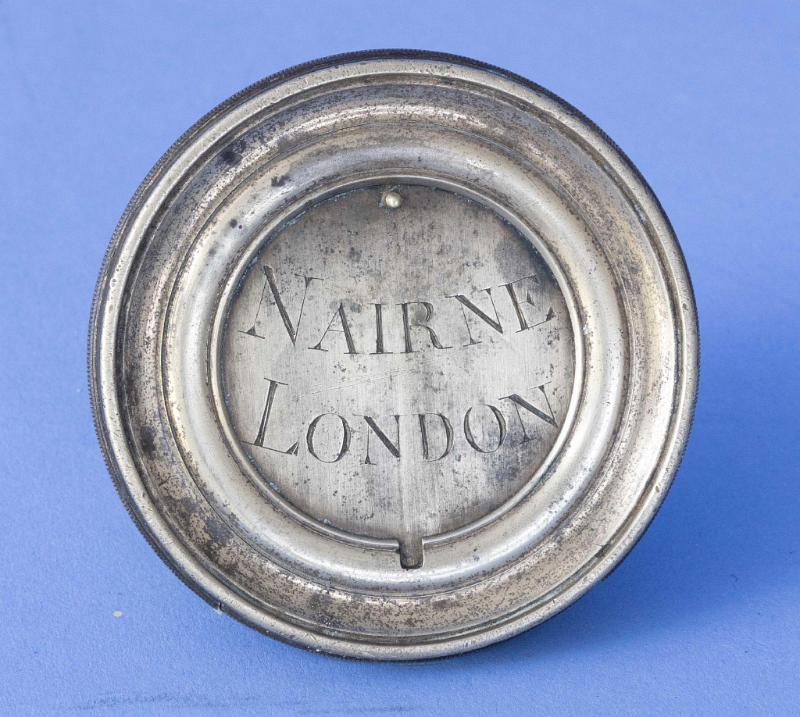
InformationRare ten-sided mahogany tapered telescope, signed "Nairne London", circa 1770. The telescope is complete and has a sliding lens plate which is signed and drops down so that one can view through the scope. The telescope also has a typical English brass eye piece with dark slide. Like most 18th century telescopes, the draw tube can be pulled out because there is a no stop device. (I 1010)
Dimensions: Length closed: 52 1/2 inches.
Draw tube with eye piece: 12 5/8 inches.
Condition: The telescope is in excellent condition and has a mellow patina.
Note: Edward Nairne (1726-1806) was an important maker of scientific instruments and in 1760 Thomas Blunt became Nairne's assistance and in 1774 they formed a partnership "Nairne and Blunt", a relationship that endured until 1793 when Blunt opened his own shop at 22 Cornhill. Nairne patented several electrical machines, including an electrostatic generator consisting of a glass cylinder mounted on glass insulators, intended for medicinal use. He also made improvements to the Cuff microscope, building it into a portable case and calling it a chest microscope.
In the early 1770s, Edward Nairne constructed the first successful marine barometer by constricting the glass tube between the cistern and register plate. The instrument was suspended from gimbals mounted within a freestanding frame to provide additional stability. Nairne’s first marine barometer was on James Cook’s second voyage to the South Pacific. In 1776 Nairne was elected a fellow of the Royal Society. He enjoyed an extensive international reputation, and corresponded with Benjamin Franklin, for whom he made a set of magnets and a telescope around 1758. On Franklin's recommendation, he was asked to supply instruments for the fire-damaged collection at Harvard University.
circa 1790
Classification(s)